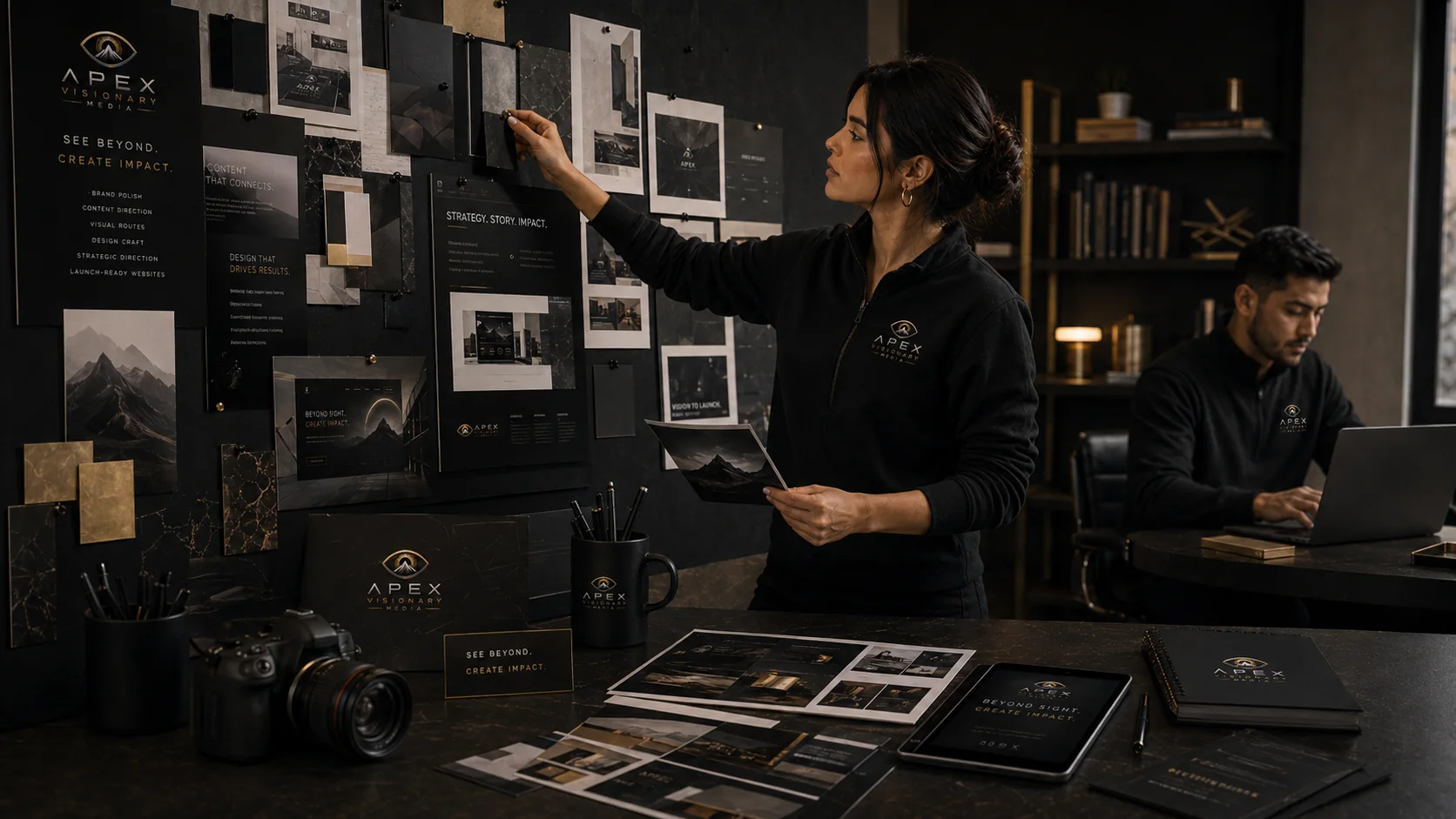
AVM Design Studio

Direction before decoration.

A working creative process for finding the voice, imagery, typography, and composition that make a digital presence feel specific to the business.

Moodboard, typography, and visual references assembled in the AVM Design Studio
Working artifact / route exploration

A real design system

The ingredients are visible. The judgment is in the edit.

Instead of a simulated creative score, the studio works with tangible material: type scales, color relationships, image treatments, messages, and page compositions.

Identity direction / industrial editorial

Typography specimen
Aa
Voice principle 01Say what the company does before saying how it feels.
Voice principle 02Use operational detail as proof—not decoration.
Composition principleChange scale and density to create an editorial reading rhythm.

How a route becomes a system

We make decisions in the right order.

Each stage narrows the field. The result is a deliberate direction with enough logic to stay consistent as the website grows.

01

Positioning

Define the audience, offer, market context, and sharpest credible story.

02

Content hierarchy

Organize claims, proof, services, and calls to action into a useful reading path.

03

Visual routes

Compare real combinations of typography, imagery, palette, and composition.

04

Responsive composition

Turn the selected route into a flexible system for desktop, tablet, and mobile.

References with a job to do

Mood is useful when it points toward a decision.

Every reference answers a question: Should the voice be more direct? Should the imagery feel documentary? Should the typography carry more authority or motion?

Brand identity materials and typography being evaluated
Brand system / material language
Printed design details and identity components
Identity detail / consistency check

What leaves the studio

A direction your team can actually use.

Deliverables depend on scope, but the goal stays consistent: provide the core decisions and production-ready pieces needed to build, launch, and maintain the experience.

See engagement starting points
  • Message architecturePositioning, page hierarchy, headline and proof routes.
  • Visual directionTypography, palette, imagery, composition, and motion principles.
  • Responsive page systemKey page designs and reusable section logic across screen sizes.
  • Production assetsSelected graphics, image treatments, icon direction, and implementation notes.
  • Launch reviewVisual QA, content cleanup, accessibility cues, and final refinements.
  • Usage guidanceA practical record of decisions so future additions still feel connected.

Start with the real problem

Bring the ambition. We’ll find the visual language that can carry it.

Share the business context, the audience, and what the current presence is failing to communicate.